

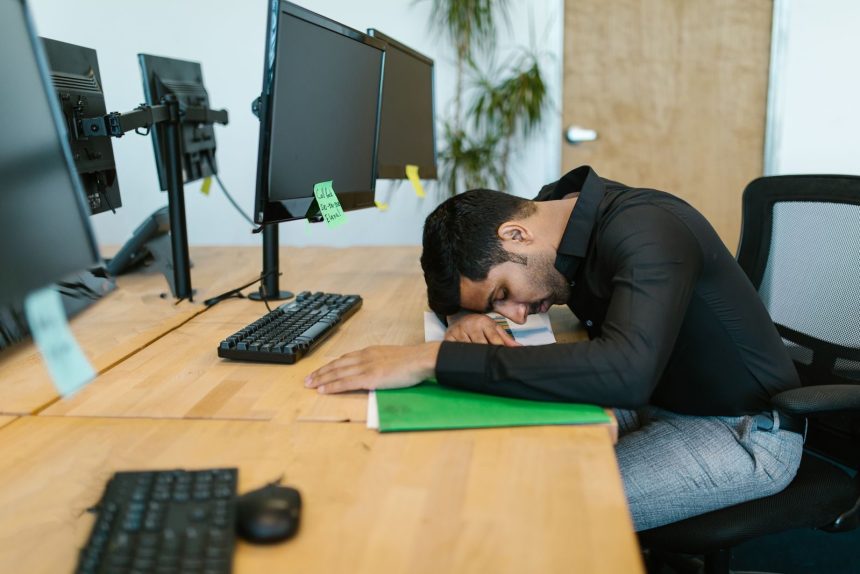
Sleep scientist explains how less sleep can lead to brain fog, poorer judgement and slower reaction times
Two in five (41%) UK workers say work-related stress negatively impacts their sleep, and almost three-quarters (72%) of managers also face increasing pressure to maintain high performance.¹
For most adults, reduced or impacted sleep can affect the deep sleep and REM stages needed for physical recovery, memory, and decision-making.
To understand how sleep affects business leaders’ ability to perform, Hannah Shore <https://www.mattressonline.co.uk/our-experts/hannah-shore/>, Head of Sleep Science at MattressOnline <https://www.mattressonline.co.uk/>, explains how disrupted sleep could affect everything from judgement and concentration to long-term health:
Can Leaders Really Function On Less Sleep?
“Whilst some people are naturally shorter sleepers than others and can function on less sleep, this is extremely rare, around 1-2%.
“To get quality sleep, you need to spend enough time in each different stage of sleep to get full recovery. The first half of sleep tends to focus on deep sleep, which helps with physical recovery, while the second half includes more REM sleep, which supports memory consolidation and emotional processing.
When we don’t have a regular sleep schedule and don’t spend enough time in each stage of sleep, the body tries to recover wherever it can.”
Why Every Stage Of Sleep Matters
“The debate around sleep quantity versus sleep quality has been ongoing for years. However, in order to get quality sleep, you need to spend enough time in each different stage of sleep to get full recovery.
“Whilst the first half of sleep tends to focus on deep sleep to recover the body physically, the second half of sleep focuses on lighter sleep and REM to help the brain by consolidating memories and emotions.”
How Sleep Deprivation Can Affect Decision-Making
“When we don’t spend enough time in each sleep stage, then we can start to feel the effects. A reduced amount of deep sleep leads to aches and pains, increases your chances of becoming ill and, in the long term, can leave you with serious health conditions.
“A reduced amount of lighter sleep and REM leaves you with brain fog, altering your judgement, making you struggle to concentrate or recall memories and even increasing your reaction time, causing your overall performance to decrease.”
Why High-Pressure Roles Can Disrupt Sleep
“If you are working in an environment where you are ‘always on’, you haveto expect there to be an increase in cortisol in the system, which may be affecting how much sleep an individual feels they need.
“Work stress, and stress in general, is one of the leading causes of sleep disturbance. When we are stressed, we have an increased amount of cortisol, known as the stress hormone.
“For this reaso n, we see cortisol as a wake-promoting hormone, meaning when these are being produced, we struggle to fall asleep and stay asleep.”
The Long-Term Risks Of Running On Empty
“However, functioning this way can only last so long before we start to see the long-term effects of chronic sleep deprivation, such as heart disease, diabetes, and other long-term illnesses.
“If you find yourself regularly not getting enough hours of sleep due to stress, you need to address the underlying cause of the stress, which may help you improve your sleep. Mindfulness and breathing exercises can physically help to lower your heart rate and breathing rate, but
finding something that suits you is always the best option. If you are struggling with this, then seek help from a medical professional.”
For more advice on how sleep deprivation can affect your daily life, click here.