
By using this site, you agree to the Privacy Policy and Terms of Use.
Accept
Start Your Business Magazine
Sunday, Jul 26, 2026
  • Connect:
  • Podcasts
  • Get the Book!
  • Contacts
  • Starting Up

    Starting Up

    a guide to starting a business

    • Business Planning
    • Business Ideas
    • Startup Checklists
    • Company Formation
    Reading: Trademarks vs. Copyrights:
    • Business Banking
    • How to Guides
    • eCommerce
    Reading: Trademarks vs. Copyrights:
  • Funding

    Funding

    raising finance and managing cashflow

    • Start Up Funding
    • Grants
    • Business Angels
    • Venture Capital
    Reading: Trademarks vs. Copyrights:
    • Venture Debt
    • SEIS/EIS
    • Growth Capital
    • Bridging Loans
    Reading: Trademarks vs. Copyrights:
    • Commercial Mortgages
    • Invoice Finance
    • Merchant Cash Advance
    Reading: Trademarks vs. Copyrights:
    Get Quotes
  • Running

    Running

    managing a small business

    • Advertising
    • Social Media
    • Email Marketing
    Reading: Trademarks vs. Copyrights:
    • Card Machines
    • Payment Gateway
    • Payments by Phone
    Reading: Trademarks vs. Copyrights:
    • Remote Working
    • Serviced Offices
    • Virtual Office
    Reading: Trademarks vs. Copyrights:
  • Growing

    Growing

    scale and grow your business

    • Scaling
    • Finance
    • Technology
    Reading: Trademarks vs. Copyrights:
    • Accounting
    • Manufacturing
    • Tax
    • Marketing
    Reading: Trademarks vs. Copyrights:
    • Import Export
    Reading: Trademarks vs. Copyrights:
  • SME Update

    SME Update

    the latest news and expert advice

    • Lastest
    • Business Experts
    • Blogs
    • Business Advice
    Reading: Trademarks vs. Copyrights:
    • Interviews
    • Books
    • Events
    • Agenda
    Reading: Trademarks vs. Copyrights:
    • Wellbeing
    • Women in Business
    Reading: Trademarks vs. Copyrights:
Reading: Trademarks vs. Copyrights:
Newsletter
Font ResizerAa
Start Your Business MagazineStart Your Business Magazine
  • How To
  • Books
  • Podcasts
  • Interviews
Search
  • Agenda
  • Contact Us
  • Book Review
  • Blogs
  • Finance
  • Growing Business
  • How To
  • Interviews
  • Categories
    • Marketing
    • Startups
    • Advertising
    • Market Trends
    • Tech Moves
  • Marketing
  • SME Update
  • Starting Up
  • Technology
  • Wellness
  • Contact

Trending →

Investing in ETFs

Marketing Agencies

How to Start a Building Material Business

Communicate Better

The Strawman Theory Explained

Follow US
Start Your Business Magazine > Blog > agenda > Trademarks vs. Copyrights:
agenda

Trademarks vs. Copyrights:

Start Your Business
Share
5 Min Read
SHARE

What’s the Distinction? Trademarks and Copyright Defined

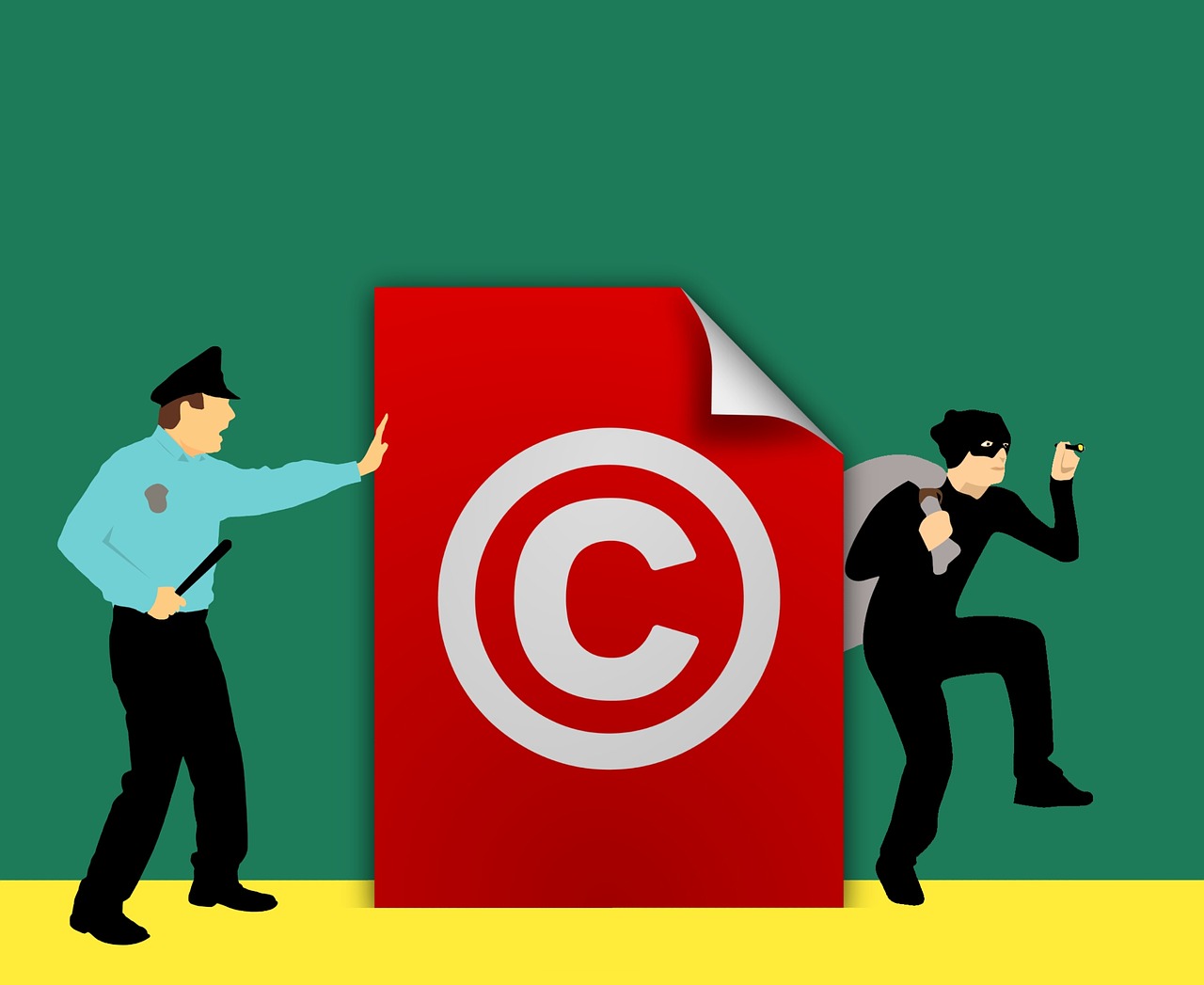
While the terms trademarks and copyrights are sometimes mistakenly used interchangeably, they are different forms of protection for intellectual property. 

Contents
  • What’s the Distinction? Trademarks and Copyright Defined
  • Similarities and Differences
  • Leveraging Trademark and Copyright Protection for Comprehensive Legal Coverage

Trademarks may be one or a combination of words, designs, sounds, scents, or shapes, used to distinguish the goods or services of one person or organization from those of others. In this way, trademarks operate as identifiers of source. 

Copyright provides protection for original creative works, namely literary, dramatic, musical, and artistic works as well as performer’s performances, sound recordings, and communication signals. To qualify for copyright protection, a work must be original and fixed in a medium. Consequently, works that are transitory in nature, such as improvisational speeches or performances that are not written or recorded, are ineligible for copyright protection as they are not fixed.

Similarities and Differences

Trademarks and copyrights share certain similarities. For example, unlike other forms of intellectual property, both trademark rights and copyrights can arise without registration. Further, both forms of intellectual property can be used to protect creative assets.

However, there are important differences between trademarks and copyrights. For example, while both forms of intellectual property are valuable business assets, trademarks and copyrights create value in different ways. Trademarks create value by inspiring customer loyalty, motivating purchasing, and commanding price premiums. In contrast, copyright allows an owner to derive financial rewards from the use of their work.

Further, while trademark rights are purely economic rights, copyrights also include moral rights. Moral rights protect the integrity of an original work by guarding against things like an author’s right to be acknowledged as the original writer of a story or a sculptor’s right to not have their sculptures distorted or mutilated. In other words, moral rights go beyond purely economic interests in a work by providing a means of enforcement against distasteful and defacing uses.

Finally, the legal rights and remedies further differ between the two forms of intellectual property in that they are embodied in separate legal statutes whose application is guided by different case precedent. These statutes and cases set out the legal remedies available to a copyright or trademark owner in instances of infringement. When choosing to enforce your trademark rights or copyrights, it is important to retain professional counsel who are suitably experienced to determine which legal regime is best suited to your circumstances. 

Leveraging Trademark and Copyright Protection for Comprehensive Legal Coverage

Trademarks and copyrights, while distinct and separate, can sometimes overlap and offer complimentary legal protection. For example, the visual design of a cartoon character is eligible for copyright protection. The character may also attract trademark protection if it is being used to distinguish the goods or services of one person or organization from those of others. 

By filing for both forms of legal protection, a business can obtain a broader scope of protection, which can be leveraged in a variety of ways, including by being licensed out to generate revenue. By way of example, Rovio Entertainment Corporation, the creator of Angry Birds™, earns over 20% of its revenue from licensing its intellectual property. Further, licensing is not only a profitable business model for large corporations, but also for startups and small businesses as there are very little costs involved. As a result, while the cost of obtaining registered trademark or copyright protection may initially intimidate, the value derived from comprehensive intellectual property protection is often well worth the initial cost.

Author Bio: Mala Milanese is an Intellectual Property Lawyer at Heer Law who specializes in Intellectual Property Litigation and Pre-Litigation Disputes.

TAGGED:header
Share This Article
Facebook Copy Link

You Might Also Like ↷

Wellbeing during the Crisis

April 22, 2020

Digital PR

March 8, 2022

Travelling to World Cup? Here are 5 things you should know

June 14, 2018

Adding Value

October 4, 2021
  • RSS
  • Terms And Conditions
  • Privacy Policy
  • Contact
  • Licensing
  • Contacts
  • Cookie Policy

Start Your Business Magazine: The Ultimate Business Start Up Guide provides information advice and guidance for entrepreneurs and new business start ups. Get the latest from us delivered directly to your inbox.

Start Your Business Magazine
  • Store
  • Features
  • Book
  • Trending
  • Topics
FacebookLike
XFollow
InstagramFollow
YoutubeSubscribe

Copyright 2026 Gambit Interactive Media Limited – All Rights Reserved.

Manage Cookie Consent
We use technologies like cookies to store and/or access device information. Cookies are used for ads personalisation We do this to improve browsing experience as well as show personalized ads. Consenting to these technologies will allow us to process data such as browsing behavior or unique IDs on this site. Not consenting or withdrawing consent, may adversely affect certain features and functions.
Functional Always active
The technical storage or access is strictly necessary for the legitimate purpose of enabling the use of a specific service explicitly requested by the subscriber or user, or for the sole purpose of carrying out the transmission of a communication over an electronic communications network.
Preferences
The technical storage or access is necessary for the legitimate purpose of storing preferences that are not requested by the subscriber or user.
Statistics
The technical storage or access that is used exclusively for statistical purposes. The technical storage or access that is used exclusively for anonymous statistical purposes. Without a subpoena, voluntary compliance on the part of your Internet Service Provider, or additional records from a third party, information stored or retrieved for this purpose alone cannot usually be used to identify you.
Marketing
The technical storage or access is required to create user profiles to send advertising, or to track the user on a website or across several websites for similar marketing purposes.
  • Manage options
  • Manage services
  • Manage {vendor_count} vendors
  • Read more about these purposes
View preferences
  • {title}
  • {title}
  • {title}
Go to mobile version