
By using this site, you agree to the Privacy Policy and Terms of Use.
Accept
Start Your Business Magazine
Sunday, Jun 21, 2026
  • Connect:
  • Podcasts
  • Get the Book!
  • Contacts
  • Starting Up

    Starting Up

    a guide to starting a business

    • Business Planning
    • Business Ideas
    • Startup Checklists
    • Company Formation
    Reading: Serviced Offices vs Conventional Commercial Leases:
    • Business Banking
    • How to Guides
    • eCommerce
    Reading: Serviced Offices vs Conventional Commercial Leases:
  • Funding

    Funding

    raising finance and managing cashflow

    • Start Up Funding
    • Grants
    • Business Angels
    • Venture Capital
    Reading: Serviced Offices vs Conventional Commercial Leases:
    • Venture Debt
    • SEIS/EIS
    • Growth Capital
    • Bridging Loans
    Reading: Serviced Offices vs Conventional Commercial Leases:
    • Commercial Mortgages
    • Invoice Finance
    • Merchant Cash Advance
    Reading: Serviced Offices vs Conventional Commercial Leases:
  • Running

    Running

    managing a small business

    • Advertising
    • Social Media
    • Email Marketing
    Reading: Serviced Offices vs Conventional Commercial Leases:
    • Card Machines
    • Payment Gateway
    • Payments by Phone
    Reading: Serviced Offices vs Conventional Commercial Leases:
    • Remote Working
    • Serviced Offices
    • Virtual Office
    Reading: Serviced Offices vs Conventional Commercial Leases:
  • Growing

    Growing

    scale and grow your business

    • Scaling
    • Finance
    • Technology
    Reading: Serviced Offices vs Conventional Commercial Leases:
    • Accounting
    • Manufacturing
    • Tax
    • Marketing
    Reading: Serviced Offices vs Conventional Commercial Leases:
    • Import Export
    Reading: Serviced Offices vs Conventional Commercial Leases:
  • SME Update

    SME Update

    the latest news and expert advice

    • Lastest
    • Business Experts
    • Blogs
    • Business Advice
    Reading: Serviced Offices vs Conventional Commercial Leases:
    • Interviews
    • Books
    • Events
    • Agenda
    Reading: Serviced Offices vs Conventional Commercial Leases:
    • Wellbeing
    • Women in Business
    Reading: Serviced Offices vs Conventional Commercial Leases:
Reading: Serviced Offices vs Conventional Commercial Leases:
Newsletter
Font ResizerAa
Start Your Business MagazineStart Your Business Magazine
  • How To
  • Books
  • Podcasts
  • Interviews
Search
  • Agenda
  • Contact Us
  • Book Review
  • Blogs
  • Finance
  • Growing Business
  • How To
  • Interviews
  • Categories
    • Marketing
    • Startups
    • Advertising
    • Market Trends
    • Tech Moves
  • Marketing
  • SME Update
  • Starting Up
  • Technology
  • Wellness
  • Contact

Trending →

Jeanette Sklivanou

By
Start Your Business
June 17, 2026

Danielle Thompson

By
Start Your Business
June 17, 2026

Joel Steele

By
Start Your Business
June 17, 2026

Flex in the City

By
Start Your Business
June 17, 2026

Importing and Exporting:

By
Start Your Business
June 17, 2026
Follow US
Start Your Business Magazine > Blog > Running > Serviced Offices vs Conventional Commercial Leases:
RunningServiced Offices

Serviced Offices vs Conventional Commercial Leases:

Start Your Business
Share
6 Min Read
iocenters, furnished offices, serviced offices
SHARE

Which is Right for Your Business?

Choosing office space is one of the most important operational decisions a business can make. It affects cost structure, flexibility, scalability, and even company culture. Two of the most common options are serviced offices and conventional commercial leases, each offering very different levels of commitment and control.

Contents
  • What is a Serviced Office?
  • What is a Conventional Lease?
  • Key Differences Between Serviced Offices and Conventional Leases
    • 1. Flexibility
    • 2. Setup Time
    • 3. Cost Structure
    • 4. Upfront Costs
    • 5. Control and Branding
    • 6. Scalability
  • Advantages of Serviced Offices
  • Disadvantages of Serviced Offices
  • Advantages of Conventional Leases
  • Disadvantages of Conventional Leases
  • When to Choose a Serviced Office
  • When to Choose a Conventional Lease
  • Hybrid Options: The Rise of Flexible Workspace
  • Conclusion

Understanding the differences can help businesses choose the right setup for their stage of growth and financial strategy.

What is a Serviced Office?

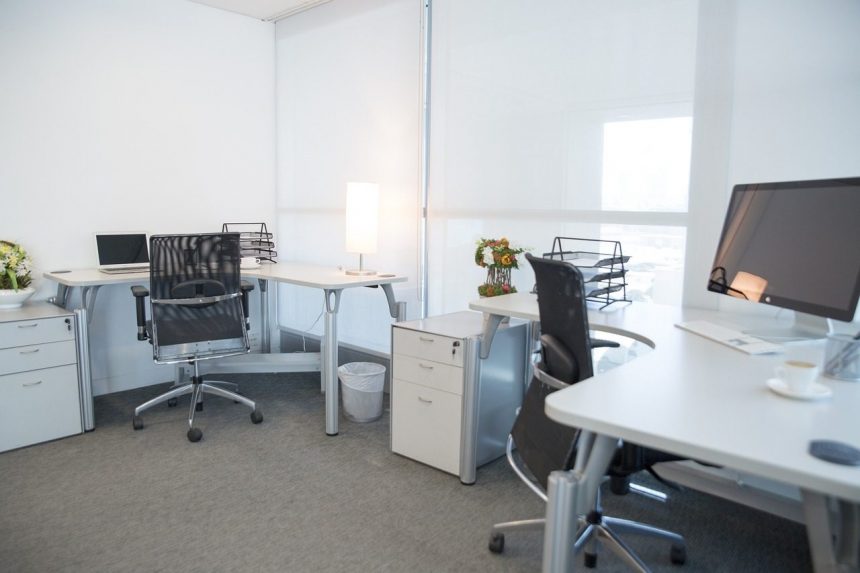
A serviced office is a fully equipped, ready-to-use workspace rented on a flexible agreement. It is typically provided by an operator who manages the building and includes services such as utilities, reception, cleaning, and IT infrastructure.

Businesses usually pay a single monthly fee that covers rent and most operational costs.

What is a Conventional Lease?

A conventional commercial lease is a long-term rental agreement between a business and a landlord for office space. The tenant is responsible for setting up and managing most aspects of the office, including utilities, furnishings, and maintenance.

These leases are typically longer-term commitments, often ranging from 3 to 15 years.

Key Differences Between Serviced Offices and Conventional Leases

1. Flexibility

  • Serviced offices: Highly flexible, often available on monthly or short-term contracts
  • Conventional leases: Long-term commitment with limited flexibility to exit early

2. Setup Time

  • Serviced offices: Ready to move in immediately
  • Conventional leases: Require fit-out, furnishing, and installation before use

3. Cost Structure

  • Serviced offices: All-inclusive pricing (rent, utilities, internet, services)
  • Conventional leases: Base rent plus additional costs such as utilities, insurance, and maintenance

4. Upfront Costs

  • Serviced offices: Minimal upfront costs
  • Conventional leases: High upfront costs including deposits, legal fees, and fit-out expenses

5. Control and Branding

  • Serviced offices: Limited ability to customise space and branding
  • Conventional leases: Full control over layout, design, and branding

6. Scalability

  • Serviced offices: Easy to scale up or down as team size changes
  • Conventional leases: Scaling requires renegotiation or relocation

Advantages of Serviced Offices

Serviced offices are particularly popular with startups, freelancers, and growing businesses.

Key benefits include:

  • Immediate occupancy
  • Flexible lease terms
  • Predictable monthly costs
  • Access to shared facilities (meeting rooms, kitchens, reception services)
  • Networking opportunities with other businesses
  • Reduced administrative burden

They are ideal for businesses prioritising agility over long-term control.

Disadvantages of Serviced Offices

Despite their convenience, serviced offices have limitations:

  • Higher cost per desk compared to long-term leases
  • Limited ability to customise space
  • Less privacy in shared environments
  • Potential restrictions on branding or layout
  • Dependence on provider’s infrastructure and services

These factors can become constraints for larger or more established companies.

Advantages of Conventional Leases

Conventional leases are often preferred by established businesses with stable operations.

Key benefits include:

  • Lower long-term cost per square foot
  • Full control over office design and branding
  • Greater privacy and exclusivity
  • Long-term stability and security
  • Ability to create tailored working environments

For companies with long-term headquarters needs, this option is often more cost-effective.

Disadvantages of Conventional Leases

However, they also come with challenges:

  • High upfront setup and fit-out costs
  • Long-term contractual commitment
  • Less flexibility to downsize or relocate
  • Responsibility for maintenance and services
  • Risk of paying for unused space during downturns

These factors can limit agility, especially for growing or uncertain businesses.

When to Choose a Serviced Office

A serviced office may be the right choice if your business:

  • Is in the early stages of growth
  • Needs flexible short-term arrangements
  • Is expanding into a new market
  • Wants minimal upfront investment
  • Requires quick relocation or scaling

It is particularly suitable for startups, project teams, and international expansion hubs.

When to Choose a Conventional Lease

A conventional lease is more appropriate if your business:

  • Has stable long-term staffing needs
  • Requires a fully branded office environment
  • Wants to minimise long-term property costs
  • Needs dedicated, private space
  • Is planning long-term location stability

It is commonly used by established SMEs and corporate headquarters.

Hybrid Options: The Rise of Flexible Workspace

Many businesses now adopt a hybrid approach, combining elements of both models. For example:

  • Starting in a serviced office, then moving to a leased space
  • Maintaining a small leased headquarters and using serviced offices in other locations
  • Using coworking spaces for satellite teams

This approach allows businesses to balance flexibility with cost efficiency.

Conclusion

Serviced offices and conventional leases both play important roles in modern business strategy. Serviced offices offer speed, flexibility, and simplicity, while conventional leases provide control, stability, and long-term cost efficiency.

The right choice depends on a business’s stage of growth, financial position, and operational priorities. By carefully evaluating both options, businesses can select office space that supports productivity, scalability, and long-term success.


Share This Article
Facebook Copy Link

You Might Also Like ↷

Is it Better to Build an Ecommerce Brand or Dropship?

June 17, 2026
Colorful letters spelling 'e-commerce' on a wooden framed blackboard.

Selling on Amazon

June 17, 2026

Five dangers of oversharing on social media

June 17, 2026
Person using smartphone and credit card with laptop

Pay by Email Links:

June 17, 2026
  • RSS
  • Terms And Conditions
  • Privacy Policy
  • Contact
  • Licensing
  • Contacts
  • Cookie Policy

Start Your Business Magazine: The Ultimate Business Start Up Guide provides information advice and guidance for entrepreneurs and new business start ups. Get the latest from us delivered directly to your inbox.

Start Your Business Magazine
  • Store
  • Features
  • Book
  • Trending
  • Topics
FacebookLike
XFollow
InstagramFollow
YoutubeSubscribe

Copyright 2026 Gambit Interactive Media Limited – All Rights Reserved.

Manage Cookie Consent
We use technologies like cookies to store and/or access device information. Cookies are used for ads personalisation We do this to improve browsing experience as well as show personalized ads. Consenting to these technologies will allow us to process data such as browsing behavior or unique IDs on this site. Not consenting or withdrawing consent, may adversely affect certain features and functions.
Functional Always active
The technical storage or access is strictly necessary for the legitimate purpose of enabling the use of a specific service explicitly requested by the subscriber or user, or for the sole purpose of carrying out the transmission of a communication over an electronic communications network.
Preferences
The technical storage or access is necessary for the legitimate purpose of storing preferences that are not requested by the subscriber or user.
Statistics
The technical storage or access that is used exclusively for statistical purposes. The technical storage or access that is used exclusively for anonymous statistical purposes. Without a subpoena, voluntary compliance on the part of your Internet Service Provider, or additional records from a third party, information stored or retrieved for this purpose alone cannot usually be used to identify you.
Marketing
The technical storage or access is required to create user profiles to send advertising, or to track the user on a website or across several websites for similar marketing purposes.
  • Manage options
  • Manage services
  • Manage {vendor_count} vendors
  • Read more about these purposes
View preferences
  • {title}
  • {title}
  • {title}
Go to mobile version