



Author and businesswoman Elle Lorenzoni
[CREDIT: Elle Lorenzoni]
Recognition costs the giver nothing. The psychology of who receives equity and board seats is far more expensive.
There is a peculiar kind of success available to women in business. You can become highly visible without becoming particularly powerful.
The two are easily confused because they share a stage. One tells us who is seen. The other tells us who gets to decide.
By powerful I mean something narrower than successful. The social psychologists Joe Magee and Adam Galinsky separate status, the respect others grant you, from power, control over the resources others need. Status is a loan from an audience, repayable on demand.
Every founder trades in three kinds of capital, terms I offer as a working framework. Reputational capital means people know you are good. Social capital means powerful people know you. Decision capital means you can make something happen, and for a founder it is recorded in equity and in the signature on the term sheet. It is the only one of the three that has to be taken.
In July 2026 the British Business Bank reported that all-female founding teams receive 2% of UK equity investment across the wider market, or two pence in every pound.
The gap begins as a psychological event, in the seconds in which an investor forms an impression, and widens with every judgement that follows.
The language is more candid than the cap table. Visible comes from the Latin videre, to see, something an audience does to you. Decide comes from decidere, to cut off. The founder who decides is the one holding the knife.
The halo that travels sideways
In 1920 Edward Thorndike named the halo effect, in which one admired quality colours judgement of all the others. My contention is that a halo travels along lines the observer already expects. A founder admired for her diligence comes to seem meticulous, rarely like the founder who will build something enormous.
At TechCrunch Disrupt pitches from 2010 to 2016, Dana Kanze and her colleagues found investors tended to ask men about gains and women about losses, the divide described by her co-author E. Tory Higgins’s regulatory focus theory. Founders who fielded the defensive questions raised significantly less, whatever their gender.
YOUR MOVE
1. When an investor asks about risk, answer it, then close the same answer on growth. Founders who did this raised more.
2. Which three words would an investor use to describe you afterwards? If each describes diligence, you have been filed under reliable.

Author and businesswoman Elle Lorenzoni.
[CREDIT: Elle Lorenzoni]
The price of holding your ground
Alice Eagly and Steven Karau’s role congruity theory explains why negotiation is more dangerous for women. We expect leaders to be assertive and women to be accommodating, so a woman who meets the first expectation violates the second. Madeline Heilman and Tyler Okimoto found in 2007 that women successful in male-typed roles were judged less likeable. Holding a valuation or refusing a term is how reputation becomes authority, and those are the moves most likely to be punished. A woman learns this long before anyone tells her.
YOUR MOVE
1. Write down your valuation floor before the meeting. Then read the term sheet hardest at the governance clauses, especially who appoints the board and what investors can veto.
2. Where have you softened a position in advance to remain likeable? Name the term, and put a figure on what it cost.
The work that leads nowhere
Linda Babcock and her colleagues found in 2017 that women are more likely than men to be asked to take on low-promotability work, and more likely to say yes. The cause was expectation. Everyone in the room, women included, anticipated that the women would volunteer, and so they did. The founder’s version is the panel appearance and the advisory seat without equity.
This is how a woman becomes indispensable. Others cannot do without her precisely where she already is.
In 2005 I was hired as an assistant on an animated series and was soon doing a producer’s work, from helping write the pilot to negotiating with the talent agency. When I raised it, the creator acknowledged everything I had contributed, without argument. Then he declined to change a thing. I was thanked in full and paid as an assistant.
YOUR MOVE
1. List every unpaid role you hold and note which ones have converted into a deal or an introduction. For any advisory seat, ask for equity in writing.
2. Who has come to expect your yes, and how did they learn to?
The sponsor gap
Catalyst research reported by Herminia Ibarra, Nancy Carter and Christine Silva in Harvard Business Review found women well mentored and under-sponsored. A mentor offers advice. A sponsor makes a bet, whether a warm introduction or a lead cheque. That bet turns social capital into decision capital.
Men are asked less often to do the work that leads nowhere, and their assertiveness carries no comparable penalty. They stall in visibility too, though less often. Identical behaviour converts into authority at different rates depending on who performs it.
YOUR MOVE
1. Name two people who could introduce you to an investor you need, and ask each for that specific introduction.
2. Which of your most senior admirers has spent any credibility on you in the past year?
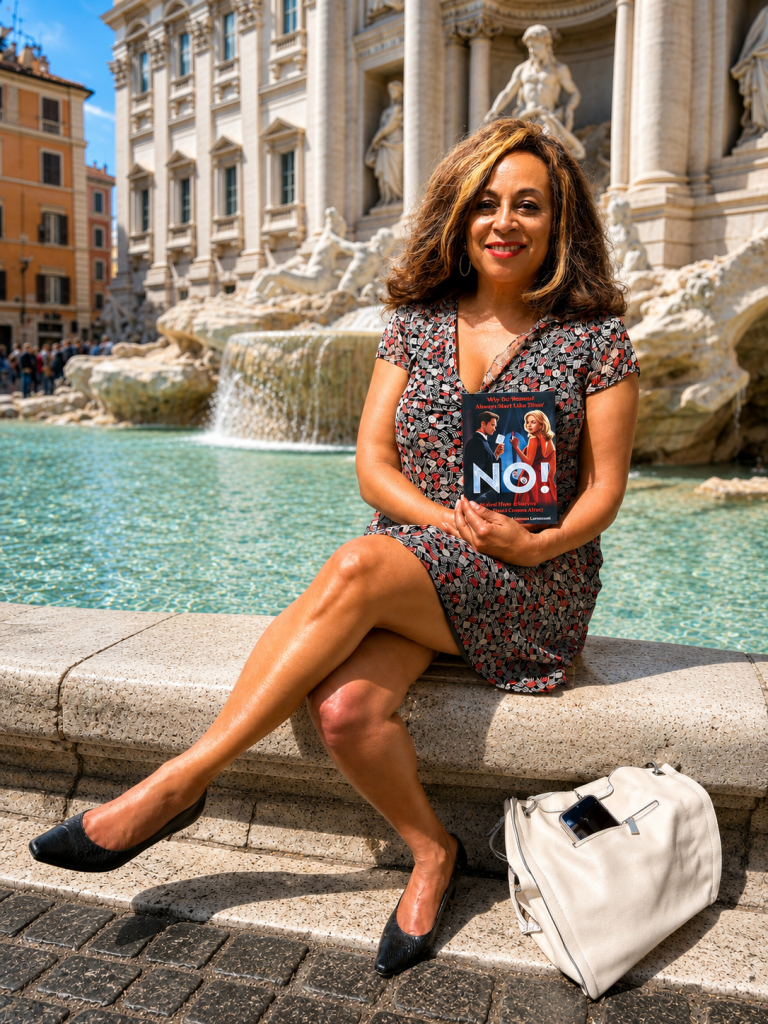
Elle at the Trevi Fountain in Rome, Italy.
[CREDIT: Elle Lorenzoni]
How advantage compounds
In 1968 the sociologist Robert K. Merton named the Matthew Effect after a verse from the Gospel:
“For unto every one that hath shall be given, and he shall have abundance.” (Matthew 25:29)
In venture it is literal. A funded company raises its next round more easily, and a founder who controls her board chooses who joins it, so every decision buys her the right to make the next.
The compounding runs through investors too. Among signatories to the Investing in Women Code, investment committees with a female majority considered all-female founding teams in 13% of their decisions, against 7% for male-majority committees. Who holds decision capital shapes who is considered for it.
YOUR MOVE
1. Before you pitch a fund, find out who sits on its investment committee and whether it has signed the Investing in Women Code.
2. Which single decision this year would earn you the right to make the next one?
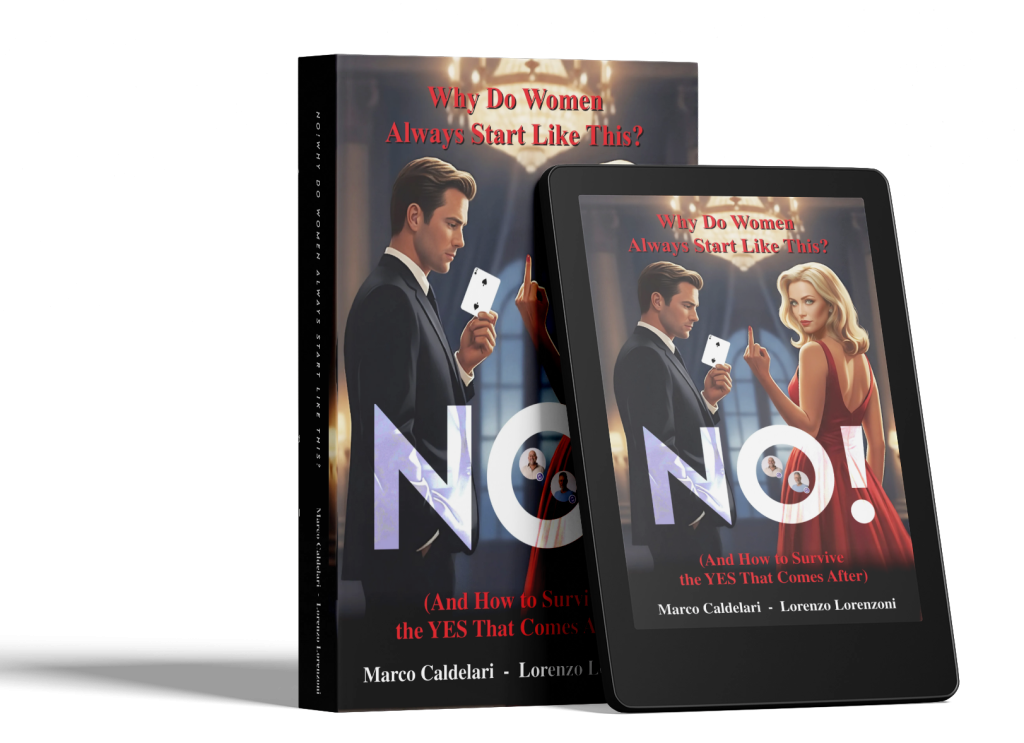
Elle’s book NO! Why Women Always Start Like This? (And How To Survive The YES That Comes After)
[CREDIT: Elle Lorenzoni]
When the audience leaves
A visible woman founder decorates the diversity report, which has made celebrating her useful, and far cheaper than backing her. Even that incentive is weakening. In March 2025 the UK’s financial regulators dropped their proposed diversity and inclusion rules for financial firms, and Britain’s commitments to women founders, such as the Investing in Women Code, are voluntary. When the audience loses interest, only the equity and the signature remain, and no policy can rescind them.
YOUR MOVE
1. For every programme or award you belong to, note what you would keep if it ended tomorrow.
2. If nobody were counting women founders next year, which of your opportunities would still exist?
Test every invitation and every round against one question. Does this increase what I own or control? Praise is the cheapest thing a powerful person can give you, and it is usually the measure of how little they intend to spend.
Why do some women become indispensable while others become powerful? The difference lies in which account each was permitted to fill, and which she insisted on filling. Authority has to be cut out, which is, after all, what deciding means.
Elle Lorenzoni is an entrepreneur, writer and commentator focused on gender, power and professional life.
She holds a BA in Rhetoric from the University of California, Berkeley, a Juris Doctor from Loyola University Chicago School of Law, and an LL.M. from the University of Fribourg in Switzerland. She began her career at the William Morris Agency in Los Angeles before developing ventures including Planning Pretty Picnics and The Spoken World, a platform for spoken word and diasporic storytelling.
Elle is also Creative Director of NO! Why Women Always Start Like This? (And How To Survive The YES That Comes After), which examines women’s refusal, autonomy and the social and professional consequences of boundary-setting. ENDS